Executive Summary
I designed a sub-wallets feature for a B2B spend management platform, giving companies the ability to segregate funds for specific purposes instead of drawing all card spend from a single pool. This was one of the most frequently requested capabilities from our customer base, and the business saw it as a key upsell lever.
As the product designer, I partnered with the PM to lead research, customer conversations, cross-platform design (mobile and desktop), and a post-launch iteration. We shipped in eight weeks. Significant portion of our base adopted the feature, and it drove a 20% increase in adoption of a higher subscription tier. A second iteration addressed navigation, accessibility, and wallet-level access controls based on direct user feedback.
Project Overview
The platform operated on a single-wallet model where every card in a company pulled from the same balance, governed only by individual card limits. That worked for some teams, but a significant share of our customers kept asking for a way to set aside specific funds for specific purposes: leases, subscriptions, expenses that absolutely cannot bounce. The existing architecture couldn't support that, and it was one of the most common feature requests we received.
I led design on this project end-to-end, partnering with the PM from research through to post-launch iteration. Early on, we benchmarked competitors and, critically, talked directly to customers who had used similar functionality on other platforms. They had strong opinions about how it should work, and that input shaped the proposal we brought to stakeholders.
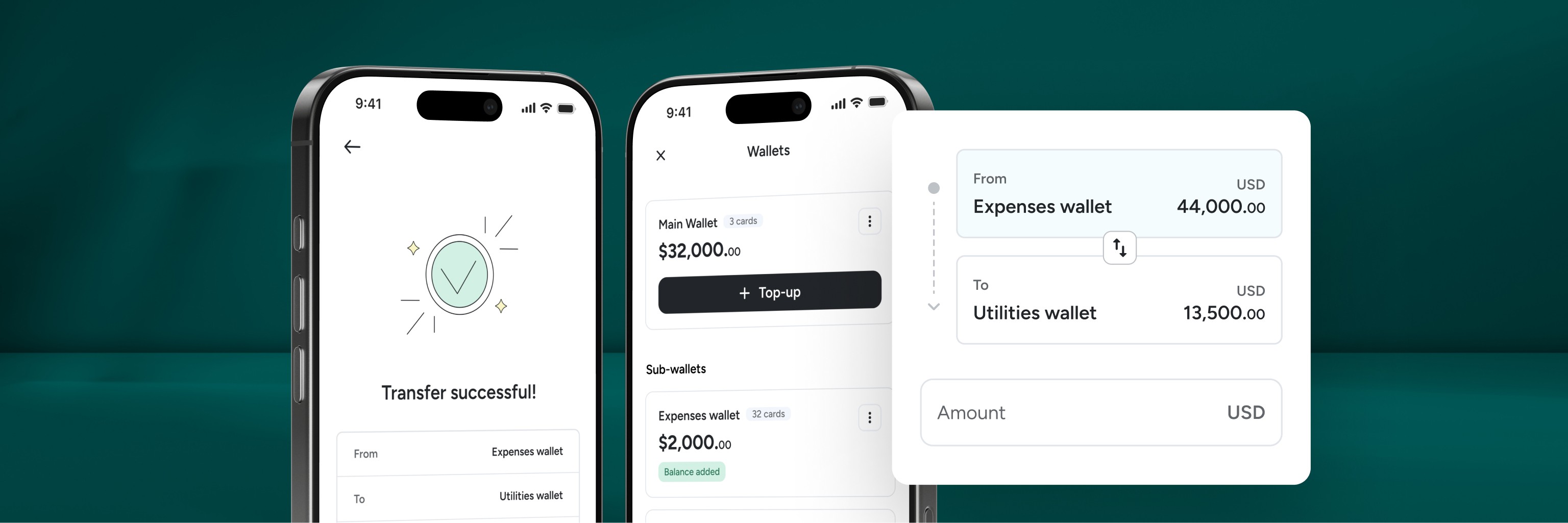
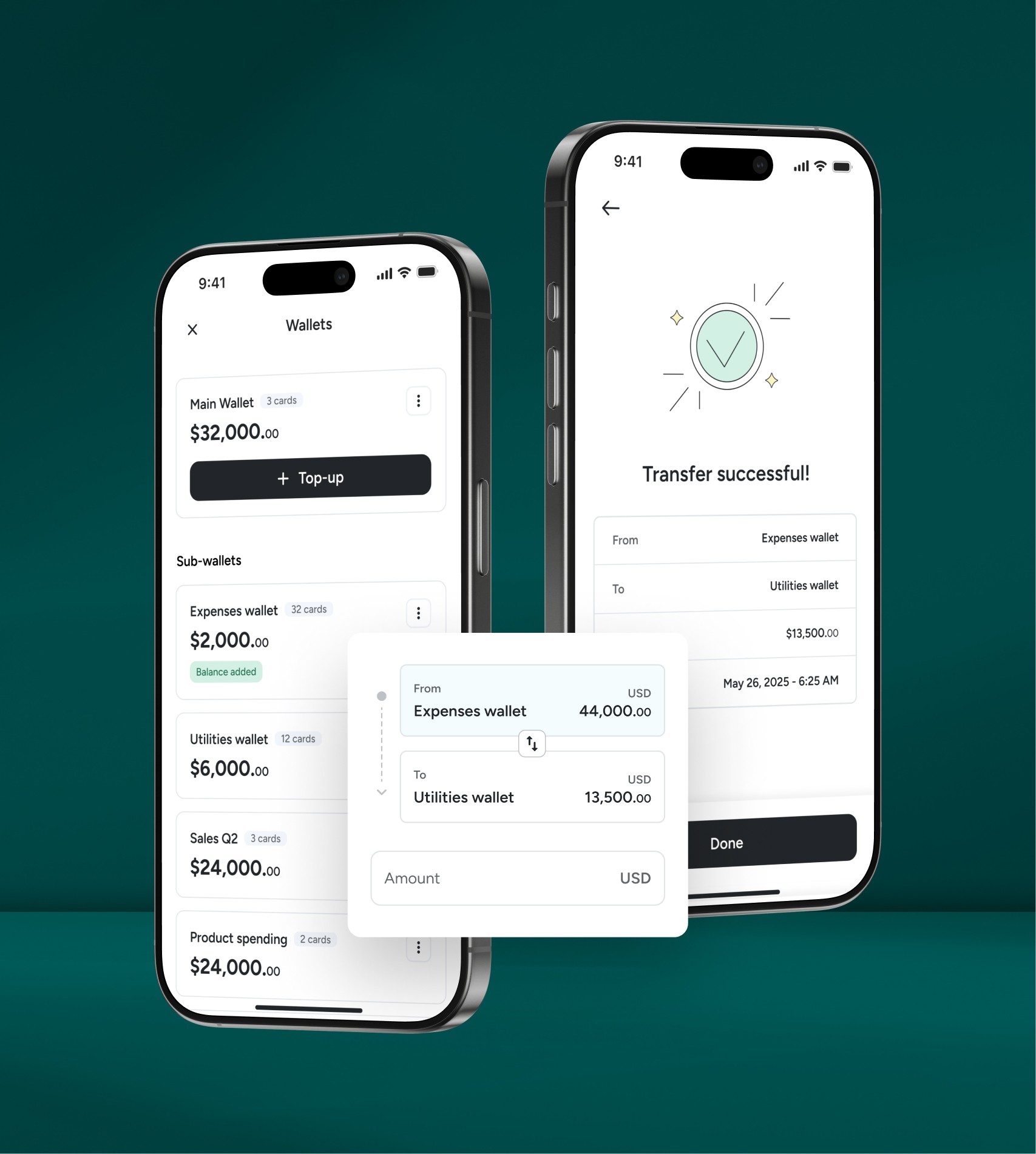
The core solution introduced sub-wallets with the ability to transfer funds between them, attach multiple cards to each wallet, and manage everything across both mobile and desktop. The release strategy was deliberate: sub-wallets were positioned as an upsell feature tied to a higher subscription tier, and it worked, driving a 20% lift in that tier's adoption.
Six months after launch, we collected structured feedback and shipped a second iteration that improved wallet navigation, tightened accessibility, and introduced wallet-level access controls so companies could restrict management to specific roles like team leads rather than all admins.